
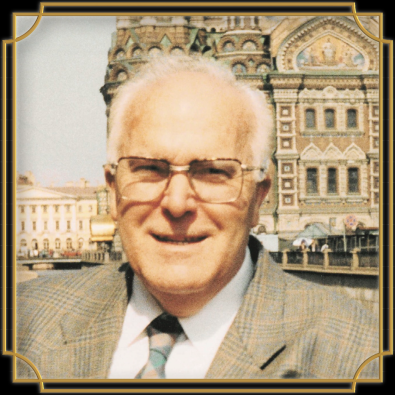
Vicente Palacios
Spain
Life, achievements, and contributions to the world of origami
Vicente Palacios was born on July 20, 1929, in Burgos. At the age of 6 or 7, he was surprised when an older boy taught him how to fold a series of consecutive figures starting with the table with a tablecloth, paper bird, double boat, butter cakes box, and finally ending in what is known in Spain as the king and queen's boat (Chinese junk in the East). Once he got home, he was able to reproduce the entire process, which sparked a passion for this art that lasted his entire life.
During his student years, he never stopped collecting every model he was taught. During his adolescence, he traveled around different parts of Spain due to his father's work, establishing himself in his youth as an administrative worker in a factory in Barcelona, where he resided for the rest of his life. In that city, he had his son Miguel Ángel, a good creator, and acquired other interests, such as becoming an expert in Theology and Chess.
At the end of the 1960s, three events occurred that definitely marked Palacios's work. Firstly, he came into contact with origami enthusiasts in Barcelona, attended some exhibitions, and was shown figures by Dr. Solórzano, who had recently been in Barcelona. Secondly, he began preparing his first book and got in touch with members of the old Zaragozano Group (Eduardo Gálvez), José María Egido, and Dr. Montero from Valladolid. Thirdly, he got in touch with distinguished members of the BOS and internationally recognized creators with whom he corresponded.
In 1972, the Salvatella Publishing House published his first book, "Papirogami," whose title seems to merge the Spanish term Papiroflexia and the Japanese Origami, the latter already expanding worldwide to refer to the art of obtaining models by folding paper. Papirogami increased the bibliography available in Spain at that time: "El Mundo de Papel" by Nemesio Montero from 1939, "Papiroflexia Zoomórfica" by Vicente Solórzano from 1962, "Una Hoja de Papel" by Lorenzo Herrero from 1952, and "Papiroflexia" by Elías Gutiérrez Gil from 1971. In Papirogami, he published mostly unpublished models that gave a strong boost to the hobby. The Salvatella Publishing House would be the one to publish his successive books in Spain.
In the following decades, he published more books, up to a total of 13 in Spanish, increasing the number of models, some of his own, most from other national and foreign authors from whom he obtained authorization at the conventions he attended, and some variations from other renowned authors. Some of these books are almost monographic, such as "Fascinante Papiroflexia" by Carlos Cordá (1984) and "Animales de Papel" by Edwin Corrie (2007). He always gives credit to the models he publishes by other creators.
From his beginnings, Palacios felt a great interest in the history of origami. He reflected this in Papirogami, providing a series of facts and historical discoveries made by him and others. His true passion, which he carried with him until his death, is the history of the paper bird (Pajarita). In 2008, he published "Historia de la Pajarita," where he argues that there are indications (not irrefutable proofs) that make one suspect it was invented in Toledo (Spain) in the 11th century.
Whether this was the case or not, in the arduous search he carried out through all libraries and museums, he found fascinating origami milestones, such as the Venetian incunable "Treatise on the Sphere" by Sacrobosco from 1490, in which the clear representation of the paper boat seen from its two sides, sailing on the shores of Venice during an eclipse, appears. This would be the oldest known representation to date of an origami model, from both West and East. From the following centuries, 16th onwards, he also obtained evidence of origami models created in those times. The closer to the 20th century, the more evidence, logically.
In 1982, he founded, along with other Spanish pioneers and creators, the Spanish Origami Association (AEP), serving as its first president for 11 years.
Vicente Palacios never considered himself a creator, stating this on many occasions, even in writing. However, he did create some original designs and made interesting variations on the work of other great creators, to whom he always acknowledged the original ideas. He loved to teach both his own creations such as “The Rose Window” (published in Kobe Shimbun, Japan 1990), “Cube with Pajaritas”, “Basket 11”, “Basket 14”, “Pentagon and Dodecahedron”, “Heart with Flame”, “Boat” or traditional ones like “Strip Fish”, “Medieval Strip Mace”, and variations he obtained from other creators' models, always giving due credit, such as “The Rat” (variant of Yoshihide Momomotani's mouse), “Pluto” (variant of Álvaro Muñoz's Spaniel Dog), “Torpedo Boat” (variant of one by Yoshihide Momotani), “The Sparrow” (variant of Akira Yoshizawa's Dove), “Translucent Modular Star” (variant of José María Villaclara's), “Star of David” (variant of Neal Elias and Fred Rohm's), “Whistling Whistle” (by Ángel Écija), among others.
Main Contribution
His main contribution to origami was the dissemination of our art internationally and the historical research of origami.
Authored by Manuel Sirgo Álvarez


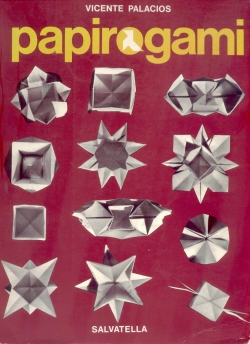 Papirogami
By:
Vicente Palacios
Papirogami
By:
Vicente Palacios
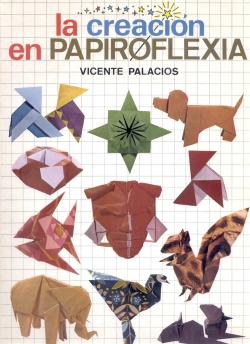 La Creación en Papiroflexia
By:
Vicente Palacios
La Creación en Papiroflexia
By:
Vicente Palacios
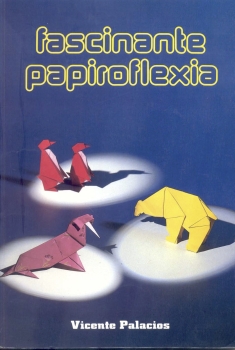 Fascinante Papiroflexia
By:
Vicente Palacios
Fascinante Papiroflexia
By:
Vicente Palacios
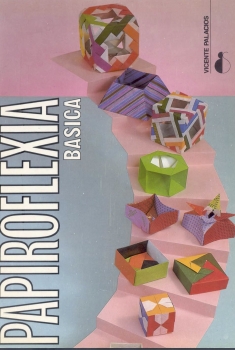 Papiroflexia básica
By:
Vicente Palacios
Papiroflexia básica
By:
Vicente Palacios
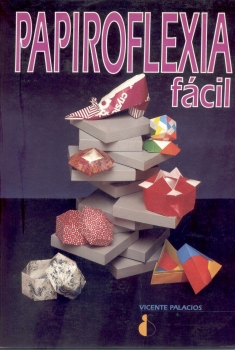 Papiroflexia fácil
By:
Ilan Admin Garibi
Papiroflexia fácil
By:
Ilan Admin Garibi
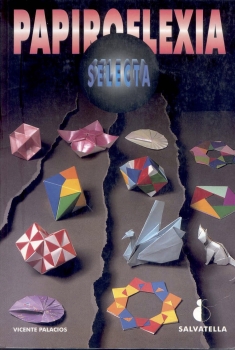 Papiroflexia selecta
By:
Vicente Palacios
Papiroflexia selecta
By:
Vicente Palacios
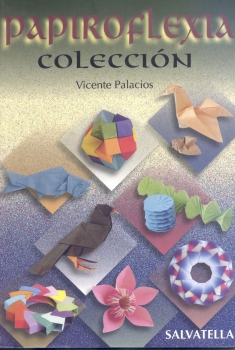 Papiroflexia Colección
By:
Vicente Palacios
Papiroflexia Colección
By:
Vicente Palacios
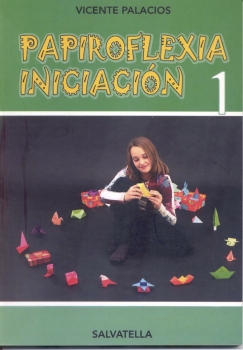 Papiroflexia Iniciación 1
By:
Vicente Palacios
Papiroflexia Iniciación 1
By:
Vicente Palacios
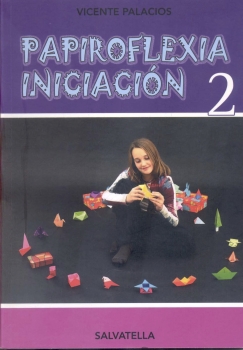 Papiroflexia Iniciación 2
By:
Vicente Palacios
Papiroflexia Iniciación 2
By:
Vicente Palacios
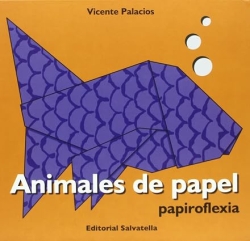 Animales de Papel
By:
Vicente Palacios
Animales de Papel
By:
Vicente Palacios
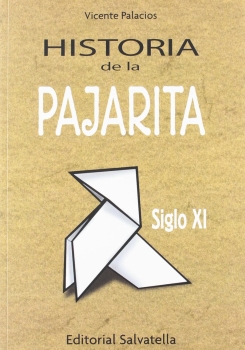 Historia de la Pajarita
By:
Vicente Palacios
Historia de la Pajarita
By:
Vicente Palacios
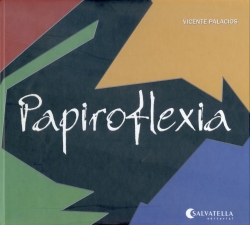 Papiroflexia
By:
Vicente Palacios
Papiroflexia
By:
Vicente Palacios
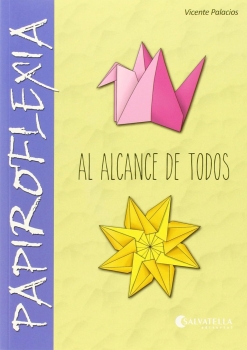 Papiroflexia al alcance de todos
By:
Vicente Palacios
Papiroflexia al alcance de todos
By:
Vicente Palacios
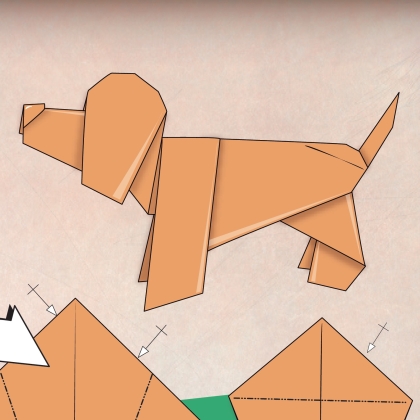
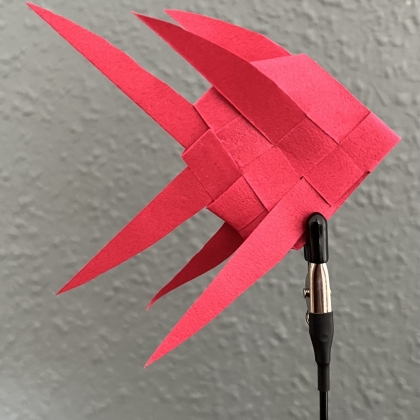
Here are 10 models that were folded by our members in memoriam of Vicente Palacios, View all models
 Translucent Modular Star (traditional JM Villaclara) Folded by Manuel Sirgo Álvarez
 Whistle that whistles (Angel Ecija) Folded by Manuel Sirgo Álvarez
 Strip fish (traditional) - Palacios - Folded by Manuel Sirgo Álvarez
 King and queen's closed boat (Gabriel Alvarez variant) Folded by Manuel Sirgo Álvarez
 Bow Tie Bucket - Palacios - Folded by Manuel Sirgo Álvarez
 Basket